Passive Detection of Social Determinants of Health in Routine Health Care Operations
One in five routine calls at a health plan and a provider organization carried a documentable social need

.png)
Executive Summary
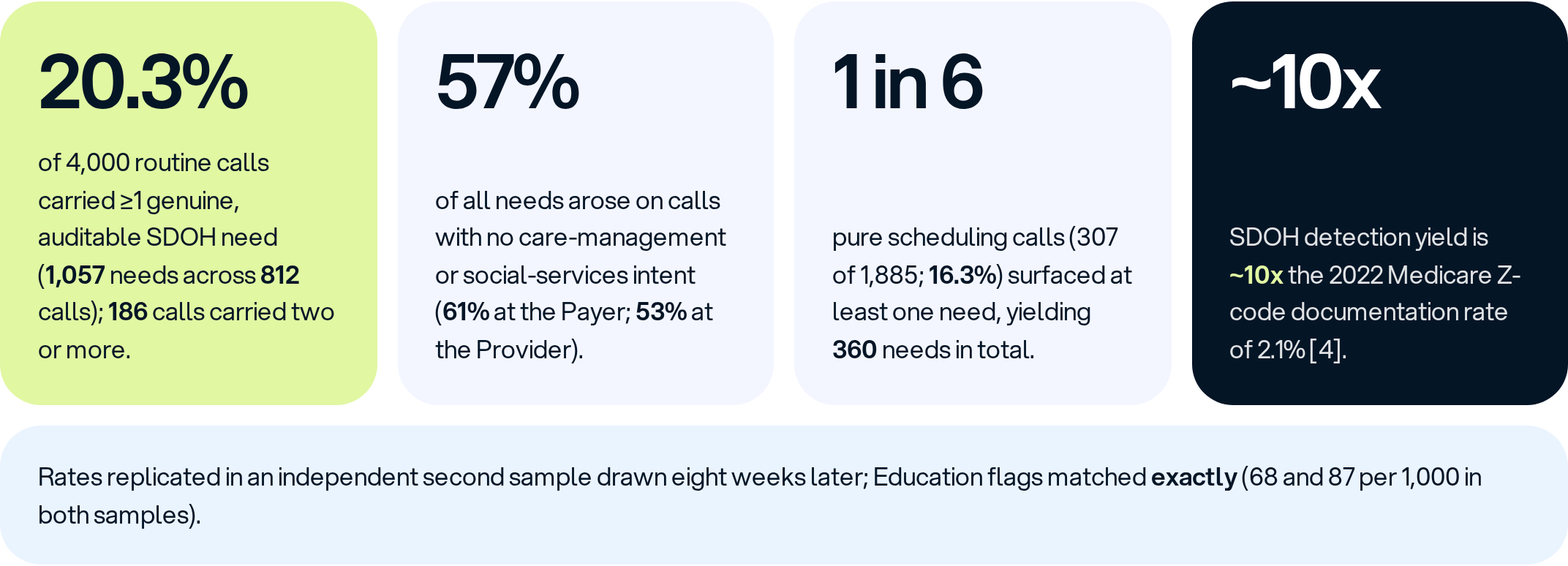
Health-related social needs drive an estimated 80% of modifiable health outcomes, yet the health care system documents them for only a small fraction of the patients who carry them: in 2022, 2.1% of hospitalized Medicare beneficiaries had any social-need diagnosis code on their claims [4], and only 16% of physician practices screen for the five core needs [7]. Rather than adding a screening workflow, Popai analyzes the conversations a health care organization is already having. We hand-judged 4,000 randomly sampled member calls, 2,000 from a payer and 2,000 from a provider, against the five Healthy People 2030 SDOH domains, with food insecurity broken out as a sixth category, requiring verbatim transcript evidence for every identified need [1,2,20].
Highlights
1. Background
Capture of social needs has lagged prevalence by an order of magnitude [16]. ICD-10-CM Z-codes appeared on claims for 2.1% of hospitalized Medicare beneficiaries in 2022, and documentation skews toward the least clinically risky patients [4,6]. Screening has not closed the gap: only 16% of physician practices and 24% of hospitals screen for the five core needs [7], and the questionnaire format itself suppresses disclosure through stigma, shame, and question wording [17]. Every existing capture point is episodic and instrument-mediated: someone must ask, at a scheduled moment, using a form [10,13,18]. Between those moments the same members are in constant contact with the system, calling to book visits, ask about coverage, and chase prescriptions, and no standardized capture point is built into those conversations. A member who tells a scheduler her refrigerator is empty has disclosed a need to her health plan; unless a human happens to act on it in the moment, the disclosure ends when the call does.
2. Methods
Two organizations participated, a health plan (the Payer) and a provider organization (the Provider), both serving predominantly publicly insured (Medicare and Medicaid) populations. Two independent samples were drawn from ~100,000-call extracts per organization: 2,000 calls (seed 42) and, eight weeks later, 2,000 more (seed 43), zero overlap, all over 60 seconds and de-identified [1]. Each call was evaluated against the five Healthy People 2030 SDOH domains, food insecurity broken out as a sixth category (mapping in Appendix C) [2,20], in two stages: a deliberately over-inclusive candidate net per domain, then a full contextual read of every candidate transcript. A keyword in an irrelevant context is never a need; a genuine need expressed without any keyword is [2]. Every identified need stores verbatim transcript evidence, re-verified against source transcripts (0 mismatches). Each call’s team was mapped to a call-intent category [3]; “incidental” detection is a need on a call whose intent does not include Care Management or Social Services. A scale validation over all 160,134 eligible source calls reproduced the headline rates (Appendix C, with limitations).
3. Results
3.1 Prevalence and findings by domain
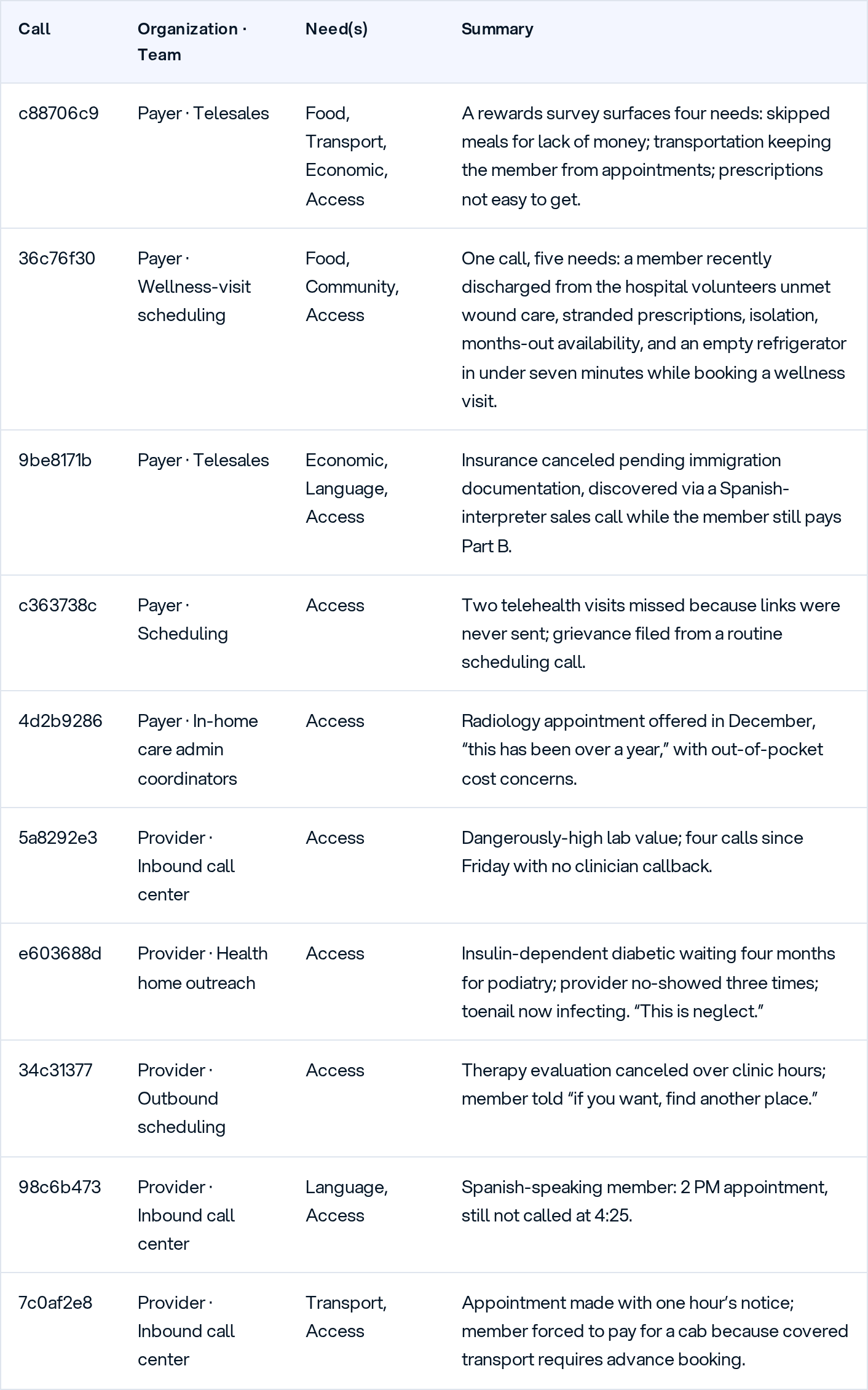
Four domains - health care access, language access, transportation and housing, and economic stability - account for 94% of the 1,057 needs (Table 1; definitions in [2], ten worked examples in Appendix B). The two organizations show distinct profiles consistent with the populations each serves: the Provider runs materially higher on language access and transportation; the Payer on medication cost, coverage disruption, and denials (Figure 1). The finding replicates: every domain’s expansion-sample rate is statistically consistent with its original-sample rate (±1 to 2.5 percentage points), and Education flag counts matched exactly in both organizations (Appendix A, Table A2).
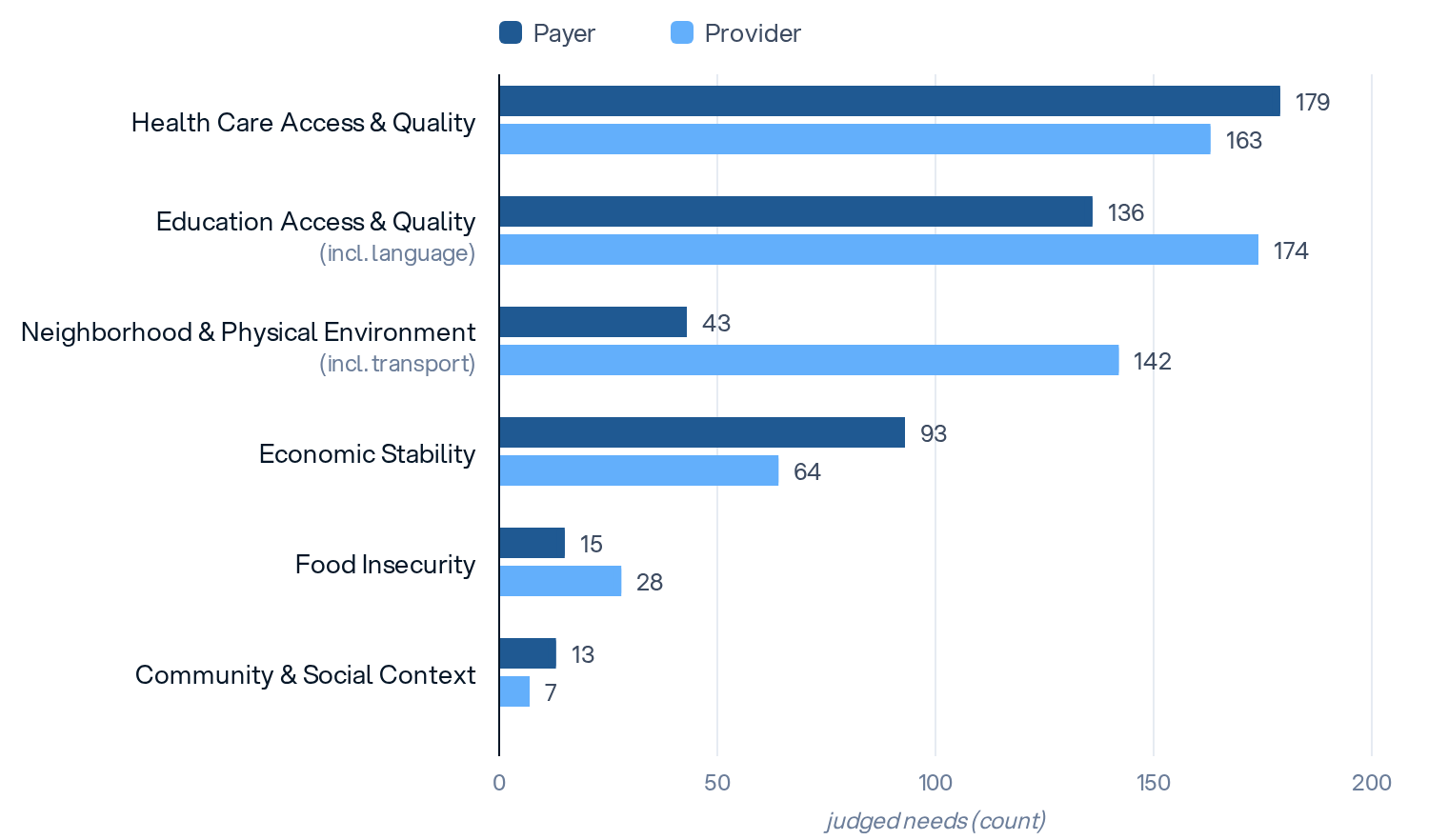
Figure 1. Judged SDOH needs by domain and organization (4,000 calls). Complete tables in Appendix A.
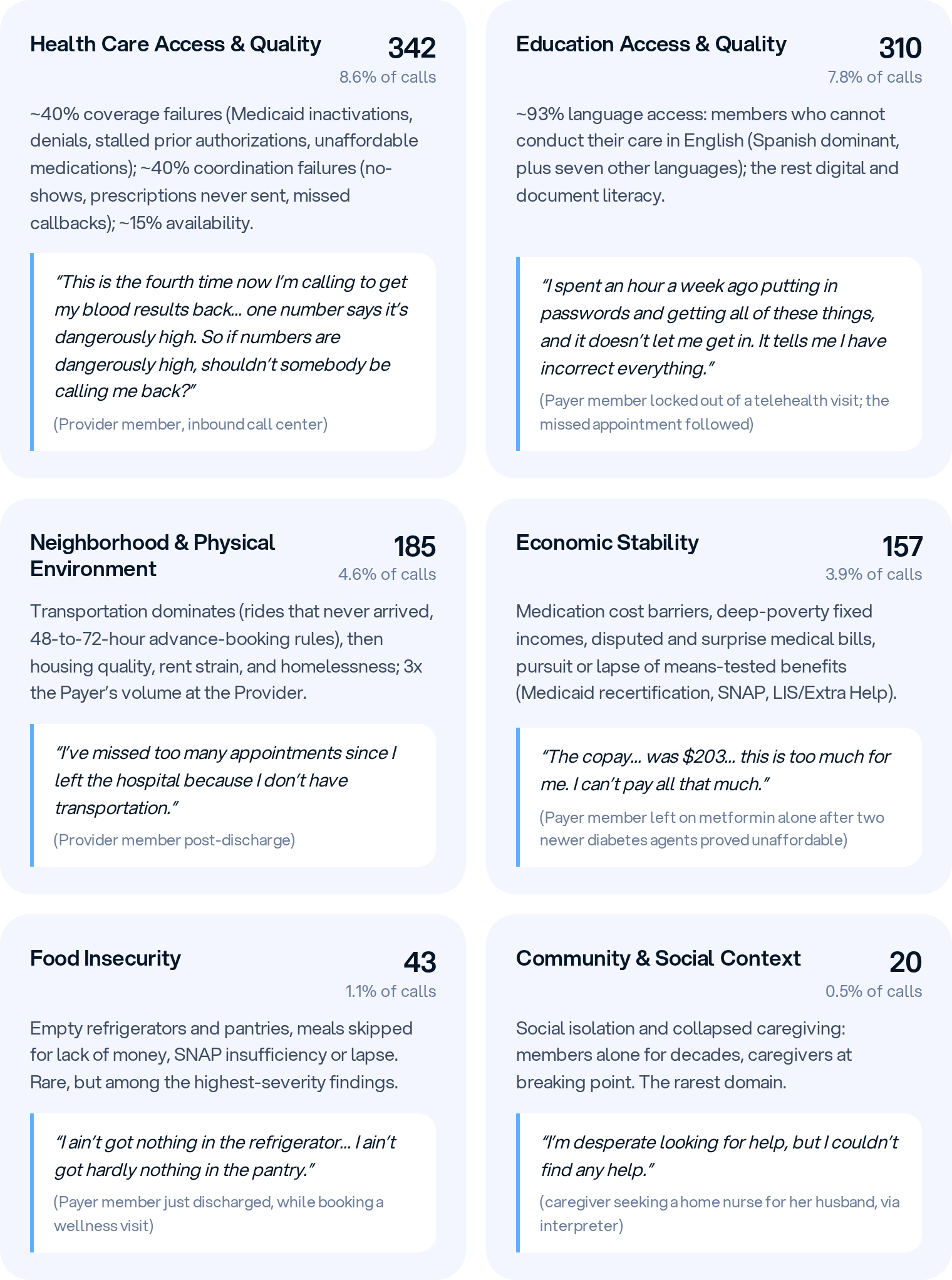
Table 1. Findings by domain (needs; % of calls), what surfaced most, and verbatim evidence.
3.2 Most needs surface outside the teams assigned to find them
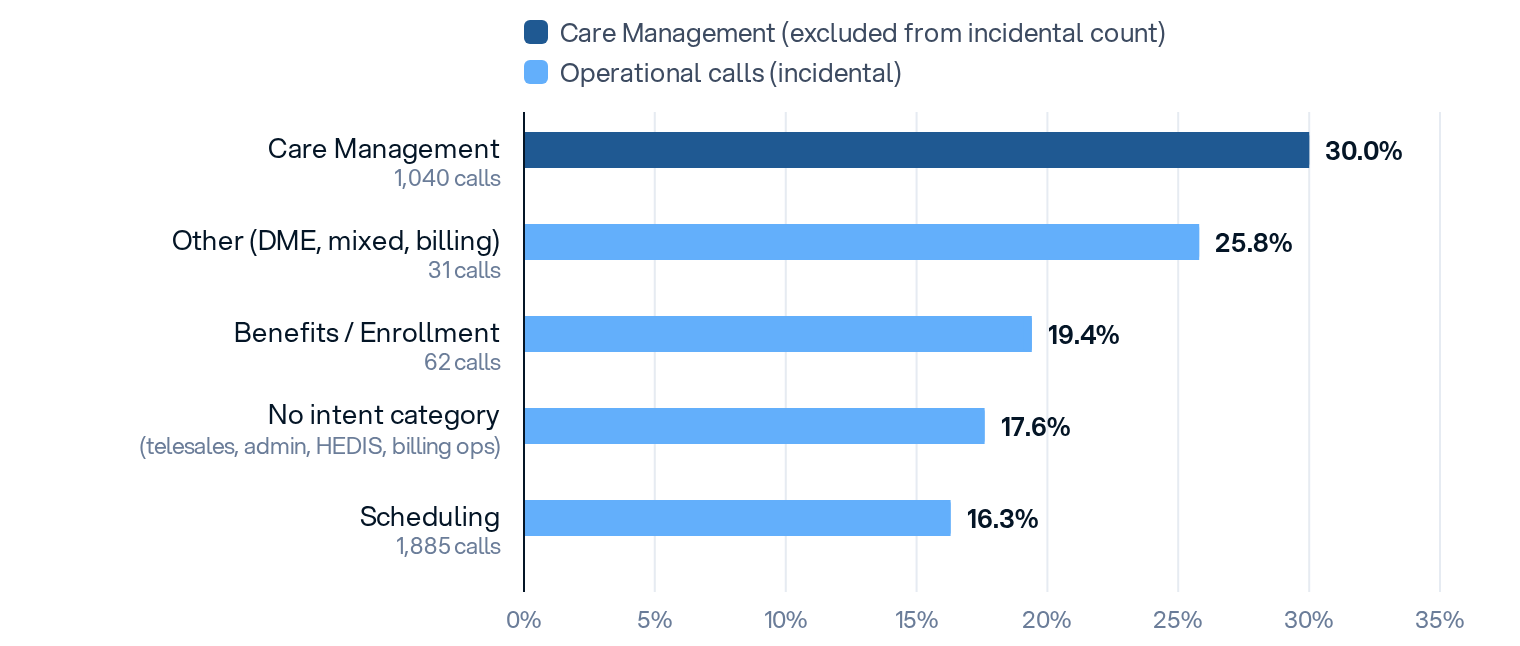
Figure 2. Share of calls with at least one judged need, by call-intent category [3].
3.3 Scheduling calls: the highest-volume, least-instrumented channel
Care-management and social-services calls exist to uncover needs; when they do, the system is working as designed, and those calls are excluded from the incidental count. Everything else is found capacity: calls that exist only to book a visit, explain a benefit, or resolve billing surfaced needs on 16 to 19% of calls, and because operational calls vastly outnumber care-management calls, they account for 57% of everything found (602 of 1,057 needs; 61% at the Payer, 53% at the Provider).
4. Discussion
Comparison with the status quo. A 20.3% per-call yield is roughly ten times the 2.1% Z-code documentation rate among hospitalized Medicare beneficiaries in 2022 [4] - a benchmark, not a like-for-like comparison, since denominators (calls vs beneficiaries) differ - and it understates the difference in kind: claims coding is retrospective, sparse, and skewed toward low-risk patients; conversational detection operates continuously, at the moment the need is voiced, with the member’s own words as evidence, volunteered as context for an operational request rather than elicited by an instrument [8,9,17].
Regulatory relevance. Payment and quality frameworks increasingly demand exactly this data: NCQA’s HEDIS Social Need Screening and Intervention measure spans Medicaid, Medicare, and commercial lines [12], and New York’s Medicaid 1115 waiver funds nine Social Care Networks ($500 million within the $7.5 billion NYHER amendment) to screen every Medicaid member through March 2027 [13]. Meanwhile CMS removed the hospital screening measures (SDOH-1/-2) in the FY2026 rulemaking and redefined the G0136 SDOH risk-assessment code for 2026 [10,11,18]: the incentives to find needs persist, but the mandated workflows do not. Passive detection fills the identification gap: it surfaces the need in the member’s own words and routes it into the standardized screening workflows those programs require [12,13].
Automation raises the stakes. Scheduling is a common entry point for healthcare voice AI [19], and it is the channel measured in §3.3. An agent optimized to place an appointment on a calendar will complete that task and discard everything else, because it has no instruction, incentive, or data path for “I ain’t got nothing in the refrigerator.” As these calls are automated, detection and routing of incidental disclosures must be designed in deliberately, or a channel that surfaces roughly 191 needs per 1,000 calls will surface none.
5. Conclusion
The routine call stream is an always-on SDOH sensing layer hiding in plain sight: no new questionnaire, no added handle time, and verbatim evidence that feeds the screening workflows HEDIS SNS-E and New York’s 1115 waiver increasingly demand. The organizations that listen to it systematically will find the needs their quality measures, waiver programs, and members already expect them to see.
Appendix A: Results Tables
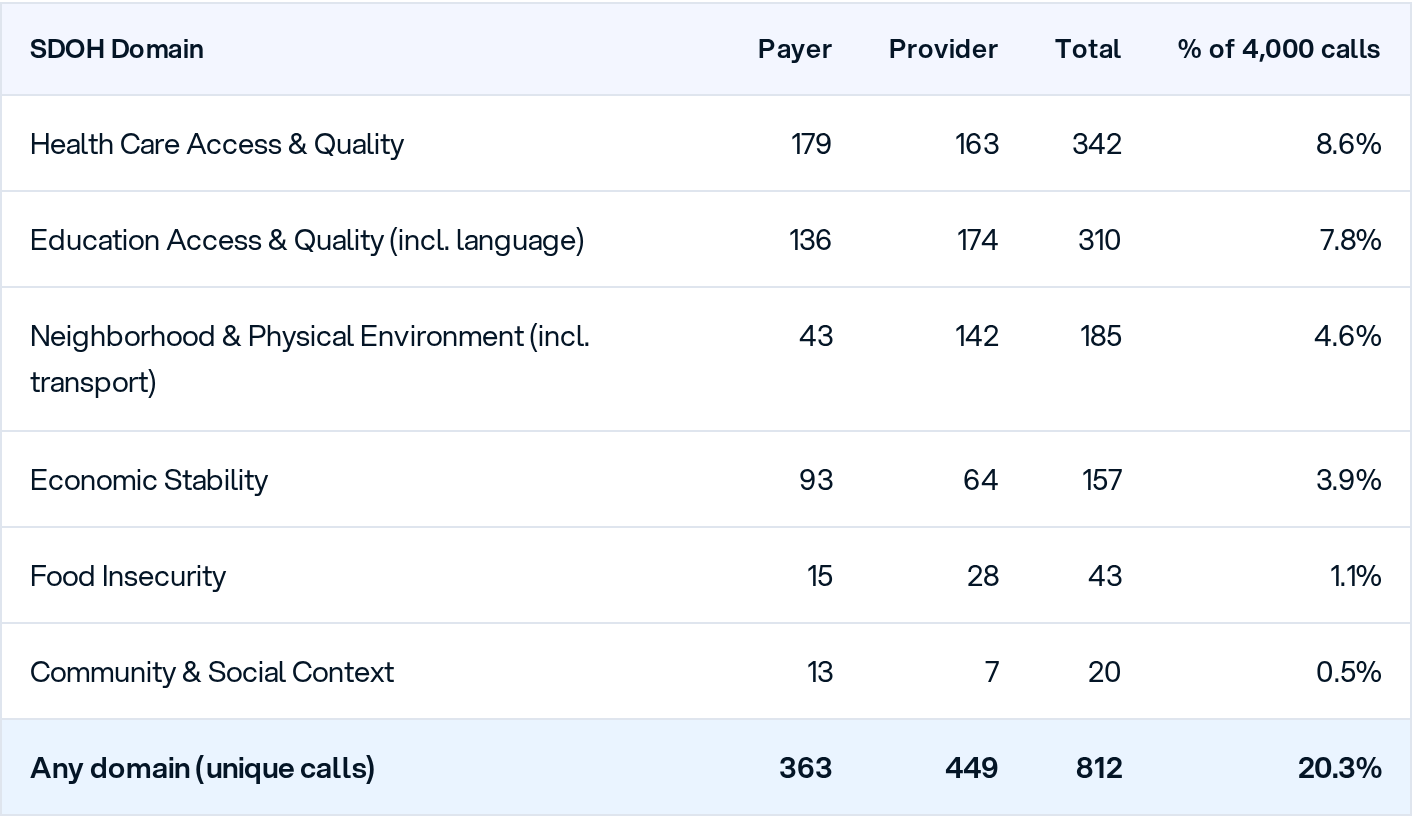
Table A1. Judged needs by domain and organization (4,000 calls).
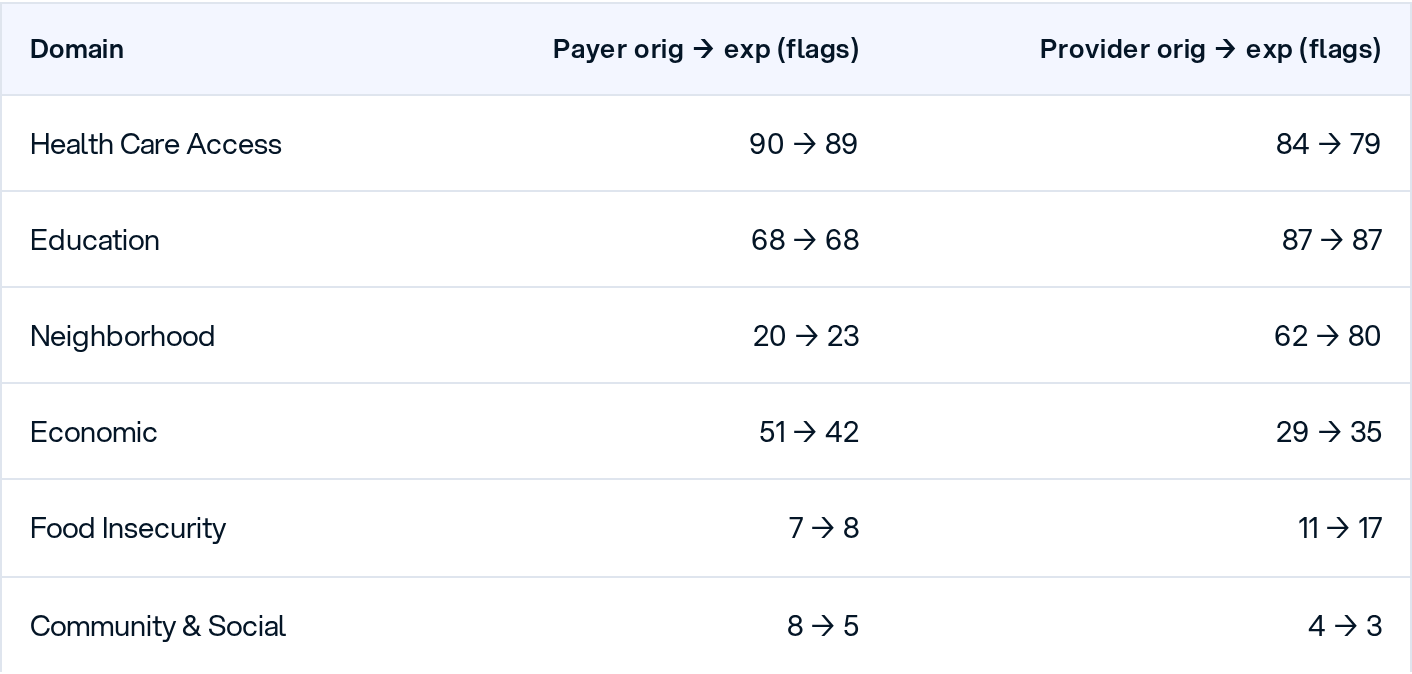
Table A2. Replication: flags per organization, original sample (seed 42) → expansion sample (seed 43), 1,000 calls each.
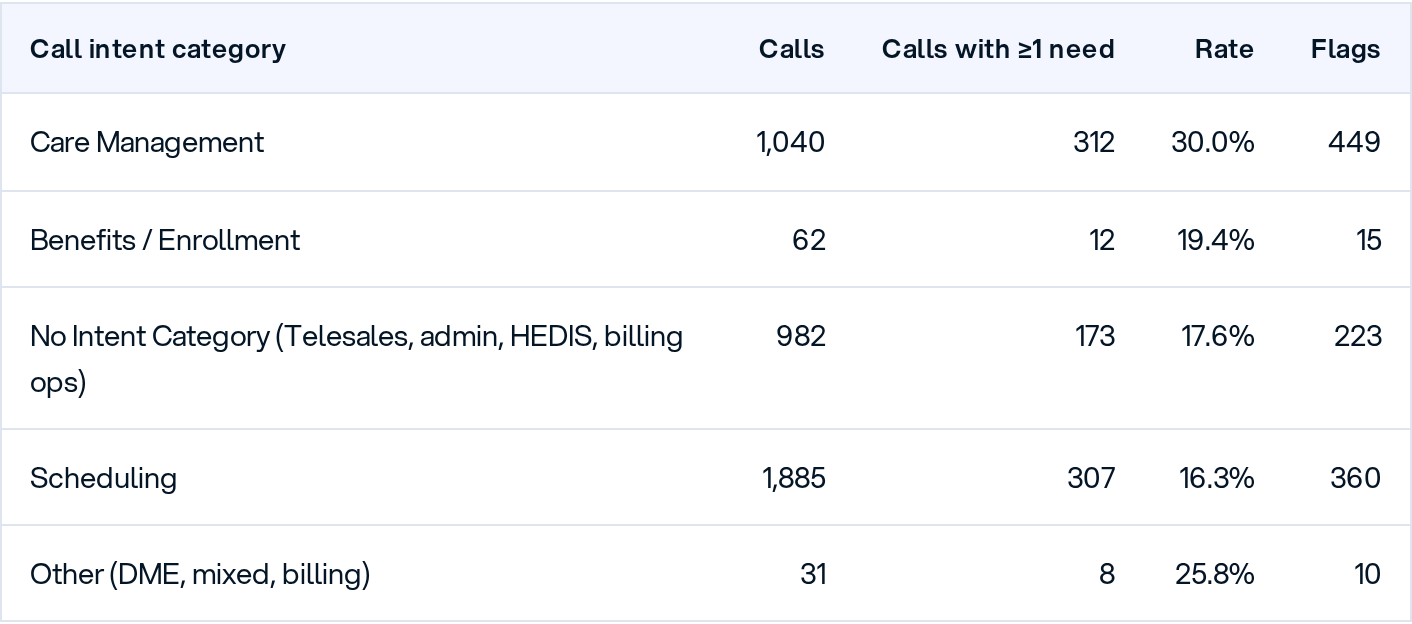
Table A3. Calls and needs by call-intent category [3].
Of the 360 needs on scheduling-intent calls, 208 (58%) fall outside Health Care Access & Quality. Excluded intents for the incidental count: Care Management and Social Services, including mixed categories containing either; because the “Other” row combines DME, billing, and mixed categories, the rows above reconcile to the 602 incidental needs only with that exclusion applied.
Appendix B: Ten Flagged Examples (verbatim)
Appendix C: Supplementary Method Detail
Where social needs are captured today. Capture is concentrated in a defined set of designated moments: screening at hospital admission under the SDOH-1/-2 measures [10,11]; questionnaires administered during a physician visit or, through 2025, as an optional SDOH risk-assessment element of the Medicare Annual Wellness Visit (G0136, redefined by CMS for 2026 as a physical-activity and nutrition assessment) [18]; the annual health risk assessment a plan mails its members; the intake assessment given to the minority of members enrolled in care management; and newer universal screening under state Medicaid waivers such as New York’s Social Care Networks [13]. The needs are prevalent in publicly insured populations like those studied here: in one large national Medicare Advantage plan, 80% of dual-eligible and 48% of non-dual-eligible beneficiaries reported at least one health-related social need, and 56.9% of Medicare Advantage beneficiaries with type 2 diabetes reported at least one [14,15]. At the hospital level, only 2.6% of US hospitals recorded a food-insecurity Z-code for any Medicare patient in a given year between 2017 and 2021, and 1.6% a transportation-need code [5]. Natural-language processing over clinical text identifies social risk for an order of magnitude more patients than structured codes [8,9].
Domain mapping. The study’s “Neighborhood & Physical Environment” corresponds to Healthy People 2030’s “Neighborhood and Built Environment,” and “Community & Social Context” to “Social and Community Context”; Food Insecurity is an objective within Healthy People’s Economic Stability domain and was judged separately here [20].
Candidate nets. Per-domain over-inclusive keyword/regex tiers plus structured call fields (Payer: barriers, broken-coordination categories; Provider: frustration classification/severity, appointment-rejected, threat/complaint). Structured-only candidates received targeted context windows; every candidate received a full contextual read; ambiguous cases escalated to full-transcript reads.
Boundary rules (examples). Screening questions answered adequately, declined offers, IVR/marketing boilerplate, plan-benefit mechanics, rewards/OTC issues, and routine in-process prior authorizations do not count; implied genuine needs without keywords do. The complete rulebook, with July 2026 boundary clarifications, is maintained in the methodology document [2].
Quality control. Expansion evidence strings re-verified verbatim against transcripts (0 mismatches); candidate nets reproduced original-sample candidates exactly (417/417 Payer, 223/223 Provider for Health Care Access) before reuse; original-sample verdicts locked and untouched throughout. All 78 team names matched the team-to-intent crosswalk [3].
Scale validation. A keyword net was applied to all 200,000 source calls, of which 160,134 met the study’s eligibility criteria. Because reading at that volume is infeasible, needs were estimated by measuring how often each net is right on the calls that were read, then applying that hit rate to the full corpus. The Payer Health Care Access net, for example, flagged 852 sample calls of which 179 were genuine, a 21% hit rate; at full scale it flagged 32,926 calls, implying roughly 6,900 needs. Hit rates were applied separately to care-management and operational calls. The estimates track the sample closely: 20.4% of calls with at least one need against 20.3% judged, 265 needs per 1,000 against 264, and a 58% incidental share against 57%. These are projections rather than judgments, but the agreement across twelve independently estimated rates indicates the sample is not an artifact of sampling.
Limitations (detail). The intent crosswalk leaves 982 calls uncategorized (conservatively counted as operational; reclassification would move the incidental share by low single digits). Call-level detection measures expressed needs, not member-level prevalence: callers are not a random member sample, members may call more than once, and members who never call or never mention a need are not counted, so the 20.3% figure should not be read as population prevalence.
Data availability (internal). Row-level dataset SDOH_Analysis_Sample_Combined_4000.csv/.xlsx with per-call domain flags, verbatim evidence, and intent_category [1]; per-domain candidate nets in analysis_scripts/ [1].
References
- Popai Health. SDOH judged-call dataset: SDOH_Analysis_Sample_Combined_4000 (4,000 calls, six domains, verbatim evidence, intent mapping). Internal analysis, July 2026.
- Popai Health. SDOH Needs: Definitions & Flagging Methodology (living document; results tables for original, expansion, and combined samples). Internal, July 2026.
- Popai Health / customer-shared crosswalk. Unique_Team_Names_Payer_Provider.xlsx: team-to-intent-category mapping. July 2026.
- Measurement Bias in Documentation of Social Risk Among Medicare Beneficiaries. JAMA Health Forum. 2025. (2022 claims; 2.1% of 7.07M hospitalized beneficiaries with any SDOH Z-code.) pmc.ncbi.nlm.nih.gov/articles/PMC12274977
- Hospital use of common Z-codes for Medicare fee-for-service beneficiaries, 2017 to 2021. Health Affairs Scholar. 2023. academic.oup.com/healthaffairsscholar/article/2/1/qxad086
- CMS Office of Minority Health. Z-Codes Utilization Data Highlights (2017 and 2019 reports). cms.gov/files/document/cms-omh-january2020-zcode-data-highlightpdf.pdf; cms.gov/files/document/z-codes-data-highlight.pdf
- Fraze TK, et al. Prevalence of Screening for Food Insecurity, Housing Instability, Utility Needs, Transportation Needs, and Interpersonal Violence by US Physician Practices and Hospitals. JAMA Network Open. 2019. jamanetwork.com/journals/jamanetworkopen/fullarticle/2751390
- Guevara M, et al. Large language models to identify social determinants of health in electronic health records. npj Digital Medicine. 2024. nature.com/articles/s41746-023-00970-0
- RISE Health. How Natural Language Processing can uncover member-level social determinants of health. risehealth.org
- Centers for Medicare & Medicaid Services. FY 2023 IPPS Final Rule: Screening for Social Drivers of Health and Screen Positive Rate measures (voluntary reporting CY 2023; mandatory CY 2024). cms.gov/newsroom/fact-sheets/fy-2023-hospital-inpatient-prospective-payment-system-ipps-and-long-term-care-hospital-prospective
- Centers for Medicare & Medicaid Services. FY 2026 IPPS Final Rule: removal of Screening for Social Drivers of Health and Screen Positive Rate beginning with the CY 2024 reporting period/FY 2026 payment determination. cms.gov/newsroom/fact-sheets/fy-2026-hospital-inpatient-prospective-payment-system-ipps-long-term-care-hospital-prospective-0
- NCQA. Social Need Screening and Intervention (SNS-E), HEDIS; MY 2026 Technical Update (standardized screening for food, housing, and transportation; G0136 removed from screening numerators). ncqa.org/blog/social-need-screening-and-intervention-whats-changing/
- New York State Department of Health. New York Health Equity Reform (NYHER) 1115 Waiver amendment ($7.5B) and Social Care Networks ($500M; nine lead entities; standardized AHC HRSN screening and coded data exchange; demonstration through March 2027). health.ny.gov/health_care/medicaid/redesign/1115_waiver; health.ny.gov/health_care/medicaid/redesign/sdh/scn/data-it_provider_factsheet.htm
- Burden Of Health-Related Social Needs Among Dual- And Non-Dual-Eligible Medicare Advantage Beneficiaries. Health Affairs. 2023. healthaffairs.org/doi/10.1377/hlthaff.2022.01574
- Health-related social needs among Medicare Advantage members with type 2 diabetes (56.9% with ≥1 HRSN). JAMA Network Open. 2023. jamanetwork.com/journals/jamanetworkopen/fullarticle/2804099
- National Academy of Medicine; County Health Rankings model. Social Determinants of Health 101 for Health Care. nam.edu/perspectives/social-determinants-of-health-101-for-health-care-five-plus-five
- SIREN; Journal of the American Board of Family Medicine; American Journal of Preventive Medicine. Patient perspectives, stigma, and acceptance in social-needs screening. sirenetwork.ucsf.edu; jabfm.org/content/33/2/170
- Centers for Medicare & Medicaid Services. MM14315, Medicare Physician Fee Schedule Final Rule Summary: CY 2026 (G0136 revised from SDOH risk assessment to standardized physical-activity and nutrition assessment, effective January 1, 2026). cms.gov/files/document/mm14315-medicare-physician-fee-schedule-final-rule-summary-cy-2026.pdf
- Industry vendor examples of healthcare voice AI adoption in scheduling, refill requests, and eligibility verification. parloa.com/blog/ai-voice-agents-in-healthcare; getprosper.ai/blog/healthcare-voice-ai-agents-guide
- U.S. Department of Health and Human Services, Office of Disease Prevention and Health Promotion. Healthy People 2030: Social Determinants of Health (five domains). odphp.health.gov/healthypeople/priority-areas/social-determinants-health